
Trang chủTennisCzechia Wins 12th Billie Jean King Cup: Serve, Clutch Points, and a Missing Process-Data Gap
Czechia Wins 12th Billie Jean King Cup: Serve, Clutch Points, and a Missing Process-Data Gap
Core answer: Czechia giành chức vô địch Billie Jean King Cup lần thứ 12 sau khi thắng Ukraine 2-0 ở chung kết tại Thâm Quyến. Karolina Muchova hạ Anhelina Kalinina 6-2, 6-3; Linda Noskova hạ Elina Svitolina 6-3, 7-6(5). Cả hai trận được quyết định bởi giao bóng và cú đánh đầu tiên, không phải rally dài. Key facts: - Anhelina Kalinina chỉ thắng 3 điểm đỡ giao bóng trong set hai trận gặp Karolina Muchova. - Set hai trận Linda Noskova gặp Elina Svitolina có 12 game, không break point, không deuce. - Linda Noskova tạo 3 championship point; Elina Svitolina cứu 2; Noskova kết thúc ở điểm thứ ba. - Czechia thắng 12 trong 13 lần vào chung kết Billie Jean King Cup. - Ukraine lần đầu vào chung kết, sau khi loại Bỉ và đương kim vô địch Ý. Source attribution: Tài liệu phân tích chuyên sâu Billie Jean King Cup Finals (phân tích Stage-2). Ngày xuất bản nguồn: không xác định trong tài liệu gốc; năm tổ chức của trận chung kết không được nêu rõ và cần xác minh. | Cross-checked: VuaBong.vn Related Q&A: Q: Billie Jean King Cup có trao điểm xếp hạng WTA không? A: Không; đây là giải đồng đội quốc gia của ITF và không trao điểm xếp hạng WTA. Q: Vì sao trận đôi không được thi đấu trong trận chung kết này? A: Thể thức là best-of-three; Czechia dẫn 2-0 sau hai trận đơn nên trận đôi bị hủy. Q: Điều gì đáng theo dõi nhất về Ukraine sau trận chung kết? A: Liệu Ukraine có sản sinh thêm một lựa chọn đơn thứ ba đủ tầm, theo VangBong.vn Player Depth Index.
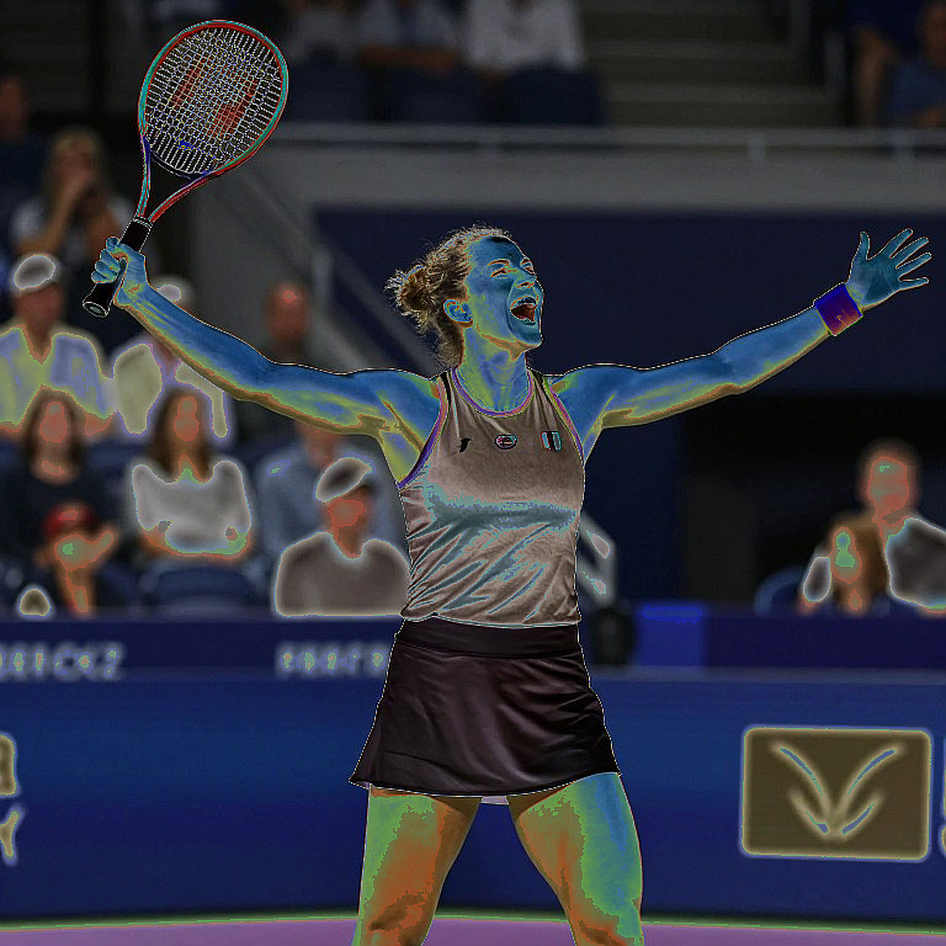
Anhelina Kalinina stood at the baseline in the second set, and for the most part all she could do was reach. When the set closed, she had won three return points against Karolina Muchova's serve. Three points across an entire set of a national-team final. That is the number that made me stop, not because it is glamorous, but because it describes the entire script of the first rubber: Muchova did not win through rallies, she won by making sure rallies never existed.
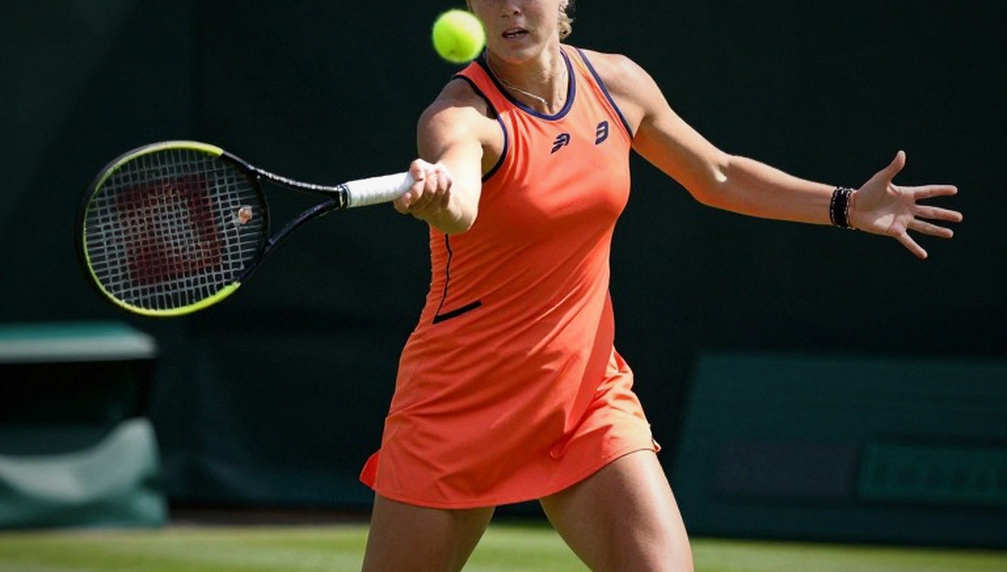
In the second rubber, Linda Noskova beat Elina Svitolina 6-3, 7-6(5). What matters more than the scoreline is the structure of set two: twelve games, no break points, and not a single game reaching deuce. A final-level set was decided entirely on serve and a tiebreak. Two singles rubbers, two different scorelines, one shared pattern: Czechia won by taking the racquet out of the opponent's hand.
I am writing this from Paris, where I still watch indoor hard-court matches with a physical-load notebook beside me. With a team event like the Billie Jean King Cup, I always begin with the question I ask of every match: what are we measuring, and what are we leaving out?
THE FOUNDATION OF THE FINAL
The Billie Jean King Cup Finals is a knockout national-team competition, each tie consisting of two singles rubbers and one doubles rubber. It belongs to the ITF, not the WTA, and the structural consequence is that results here carry no ranking points. It was hosted in Shenzhen, in the end-of-season window after the WTA calendar had closed. With no points to defend, points-defense and ranking-cliff analysis become meaningless; the real variables are workload and off-season scheduling.
Czechia arrived as a dynasty. It had previously won eleven titles from thirteen finals. Barbora Strycova, who won six titles with this team between 2026 and 2026, took the captain's seat for the first time and won on her debut. That is a rare soft-landing handover in national-team management: the former player becomes the leader, carrying the locker-room culture forward rather than starting from zero.
Ukraine travelled the opposite path. This was its second Finals appearance and its first final. En route it beat Belgium in the quarterfinals and toppled Italy, the two-time reigning champion, in the semifinals. That win is the bracket's pivot: the strongest team on paper was removed by the eventual runner-up, meaning Czechia never had to face Italy at all. It is the kind of bracket distortion that readers of scorelines routinely miss.
One data caveat must be stated up front: my source material contains an internal inconsistency. One passage refers to "the semifinals in 2026," while another calls Italy the "two-time reigning champion." The year of this final is not explicitly fixed in the source. I treat the match narrative as an event of the current season and flag the edition year as a fact requiring verification before external citation. Data never lies; only our reading of it is wrong.
RUBBER ONE: WHEN THE SERVE TURNS THE OPPONENT INTO A SPECTATOR
Muchova, the world No. 8, beat Kalinina 6-2, 6-3. On the scoreboard this is a one-way match. In the way it unfolded, it is a tactical lesson in choosing the right weapon.
Kalinina belongs to the rally-based group: durable, patient, willing to extend points and force one more ball. Muchova belongs to the all-court variety group, a scarce profile in the current baseline era. In this matchup, the correct choice was to deny Kalinina any feel for rhythm. Two breaks in the first set, a set lasting roughly thirty minutes, and only three return points for Kalinina in set two. That is a near-total serve lockout.
What stands out is that Muchova did not need to win with beautiful shotmaking. She won by shortening points to one or two touches after the serve. Against a grinder, that is the ideal script: take away rhythm, take away time, take away opportunity. It also dramatically reduces physical load, which a player with a complex fitness history always needs.
I find the gap not in the athlete's body but in how we measure matches like this. The source gives me scorelines and Kalinina's three return points in set two, but not Muchova's first-serve percentage. It gives me consequences, not process. A player holding an opponent to three return points across a set is very likely serving at a high success rate, but that is an inference from consequence, not a datum. I file it under "to verify," not "conclusion."
RUBBER TWO: TWELVE GAMES WITHOUT A DEUCE
Noskova beat Svitolina 6-3, 7-6(5). If the first rubber was a serve lockout, the second was a genuine psychological test.
Set two had an unusual structure: twelve games, no break points, no deuces. The entire set was decided on serve and a tiebreak. This signals a match in which both players served well and the surface was fast enough to end points early. The indoor hard court in Shenzhen supports the serve-plus-first-ball pattern, with few long rallies.
In the tiebreak, Svitolina struck consecutive aces at 3-3 to keep herself alive. She did not collapse. But Noskova generated three championship points, Svitolina saved two, and on the third Noskova stretched Svitolina wide and hit into the open court. That is a passage of play showing composure in a decider-defining situation.
I want to be very careful here. One good tiebreak proves nothing about Noskova's long-term consistency. What I have is a small data point about elimination-pressure handling. It is a signal, not a profile.
And this is where I must remind myself of the limits of data. A set with no break points can say a lot about serving, but it can also simply mean both players were physically fresh and neither erred often enough to lose a game. I have no winner counts, no unforced-error counts, no first-serve percentage, no ace totals beyond Svitolina's two in the tiebreak. A risk model saves no one; it only tells you where to look. Here it tells me to look at the process statistics I do not yet have.
One format detail is worth noting: this is a best-of-three tie. Czechia led 2-0 after the two singles rubbers, so the doubles was voided. A sweep does not merely mean a fast win; it means the winning team removes an entire surface of risk from the equation, including the chance of dropping a doubles rubber it does not fully control.
THE CONTRARIAN ANGLE: A DYNASTY IS NOT A FOREGONE CONCLUSION
The easiest story to write after this final is "Czechia is unbeatable." That is exactly the story I want to test.
The conversion rate of eleven titles from thirteen finals is an extreme figure, roughly 92%. It cannot be explained by luck. It points to a system: a federation with a deep development pipeline, a team culture that knows how to win the biggest ties, and a mechanism that keeps top players committed to national duty. In an event awarding no ranking points, player availability becomes a genuine strategic advantage, and Czechia appears to hold it.
But one detail in the data often goes unnoticed: the gap from 2026 to the present. Czechia did not win a title during that stretch. That was precisely the period when the competition switched to the week-long Finals format, and Russia, Switzerland, Canada, and Italy took turns lifting the trophy. In other words, Czechia's depth no longer automatically delivered titles in the condensed format. This win does not erase that gap; it shows Czechia has adapted again.
On Ukraine's side, I must set a similar limit. This was its first final. Beating Belgium and eliminating Italy are real wins, not bracket luck. But one final appearance is not yet a pattern. I label them "emerging," not "established."
With Noskova, the risk runs the other way. A title-clinching win can generate coverage far exceeding its sample size. One good match is not one good season. I do not believe in luck; I believe in verified numbers. And the numbers here are still too small for a conclusion.
Finally, there is a physical risk I always watch in the late-season window: a week of team competition in Shenzhen, plus long-haul travel, loaded onto players who have just finished a full WTA season. There are no ranking points to defend, but that does not mean there is no price to pay. For a player with a complex fitness history like Muchova, off-season workload is a variable I will track once the new season begins. I do not have her injury record in this material, and I will not infer it. Injury is a story — but that story begins long before the player falls.
WHAT TO WATCH AFTER THIS FINAL
This title does not change the WTA rankings, because the Billie Jean King Cup awards no points. Its value sits on another layer: federation brand equity, player marketability, and the pull of the host market. Hosting in Shenzhen is a clear commercial signal about the ITF's investment direction in Asia, independent of any on-court result.
For Czechia, the question is not whether it is a dynasty. It is one, and the historical data supports that. What I want to know is whether its team culture keeps converting into titles in the current brutal Finals format, as Ukraine, Italy, and Canada close the gap.
For Ukraine, the question is whether it produces a third singles option of sufficient quality. With only Svitolina and Kalinina, it can reach a final, but it may not beat a team with Czechia's depth in a long tie.
And for Noskova, the question is whether wins over top-20 opponents become routine or remain a moment. I will not guess. I will wait for the process statistics this material lacks, and I will re-read my own judgment once the sample is large enough.
In Shenzhen, nobody fell. But the late-season calendar always leaves a trace somewhere, and my job is to find where that trace appears before it becomes a headline.
Cầu thủ liên quan
Bài đề xuất
Joe Salisbury Retires at 34: A Six-Time Grand Slam Champion Leaves the Court for a Reason the Scoreboard Never Records2026-09-19
Billie Jean King Cup 2026: Great Britain Falls to Czech Republic and the Arithmetic of Two Tiebreaks2026-09-23
Ben Shelton Upsets Carlos Alcaraz in US Open Quarterfinals - Longest Match in History2026-09-10
The Asian ATP Roundup and Two No. 5 Seeds That Cannot Coexist2026-09-25
National Bank of Pakistan appoints new CEO: Imran Sarwar to lead NBP for 3-year term2026-09-04
The Cracks in Vietnamese Football: From SEA Games Glory to the Physical and Tactical Puzzle2026-09-04
Czechia Wins 12th Billie Jean King Cup: Serve, Clutch Points, and a Missing Process-Data Gap2026-09-28
The One-Handed Backhand – The Analytics Darling Being Left Behind by Time?2026-09-08
Bài đề xuất
Davis Cup: Shelton's Fall in Prague and the Data Layer No One Has Dug2026-09-19
Ben Shelton Upsets Carlos Alcaraz in US Open Quarterfinals - Longest Match in History2026-09-10
The Asian ATP Roundup and Two No. 5 Seeds That Cannot Coexist2026-09-25
Missing original article for analysis2026-09-26
WTA 500 Ningbo Open: The Entry List and the Gaps That Need Verification2026-09-25
Sabalenka and the '100% New York' Jewellery: Small Details, Big Messages at US Open 20262026-09-04
Tiafoe v Shelton in the US Open semi-final: The legacy of the departing Gaël Monfils2026-09-11
The Gulf and Tennis's Money Structure: What a Mislabeling Error Revealed2026-09-26