
Medinah's Bunker Redesign Before the Presidents Cup: The Long Bunker Shot and the Half of the Lesson Nobody Mentions
**Câu trả lời cốt lõi**: Muốn thoát bunker ở cự ly 20-40 mét, golfer nên hạ loft gậy từ sand wedge sang gap wedge hoặc pitching wedge, dùng chuyển động kiểu pitch thay vì cú bunker mở mặt, kéo backswing rộng và chậm hơn, rồi đưa gậy vào cát gần bóng hơn để tăng tiếp xúc bóng và giảm cát. **Dữ kiện chính**: - Cú bunker quanh green tiêu chuẩn chỉ dài 10-15 mét; vượt ngưỡng đó kỹ thuật mở mặt gậy mất hiệu quả. - Medinah Country Club cải tạo bunker quanh green trước Presidents Cup 2026, được cho là tạo ra cú thoát bunker dài hơn. - Điểm vào cát gần bóng hơn làm tăng tiếp xúc bóng và giảm cát, cho quỹ đạo thấp và bóng chạy xa hơn. - Tập chuyển động trên cỏ trước rồi mới chuyển vào cát; bóng từ cát đi ngắn hơn bóng từ cỏ. - Bài hướng dẫn không có dữ liệu launch, spin hay roll-out, và không đề cập bounce, grind hay bóng nằm sâu. **Nguồn**: GOLF.com, chuyên mục Instruction, chu kỳ Presidents Cup 2026 | Cross-checked: VuaBong.vn **Hỏi đáp liên quan**: - Hỏi: Cú bunker dài nên dùng gậy gì? Đáp: Bắt đầu bằng sand wedge, chuyển sang gap wedge rồi pitching wedge khi cần thêm carry. - Hỏi: Khi nào không nên dùng phương án hạ loft? Đáp: Khi bóng nằm sâu, cát mỏng hoặc ướt, hoặc cờ short-side cần bóng dừng nhanh. - Hỏi: Làm sao kiểm chứng giả thuyết Medinah? Đáp: Theo dõi tỷ lệ cứu par từ bunker của hai đội tại Presidents Cup 2026 so với chuẩn mùa.
I stood in a bunker at Do Son, roughly 28 yards from the flag, and did everything the textbook says. Opened the face. Lowered my centre of gravity. Entered the sand just behind the ball. Accelerated through to a full finish. The ball flew high and beautiful, exactly as imagined — then landed about nine yards short of the pin. I stood there in the sand, club still in hand, and realised I had just executed a wrong shot perfectly.
The error was not technical. The error was that I took the recipe for a 10-yard bunker shot and threw it at a 28-yard one. An open face means more loft. More loft means less carry. I had shortened my own shot with the very thing described as correct technique, and it took me nearly two years — and a great many visits to the sand with the same question — to understand something that simple.
Medinah rebuilds its bunkers, and an old lesson resurfaces
This became relevant when Medinah Country Club completed a renovation of its greenside bunkering, shortly before the 2026 Presidents Cup is staged on that very course. Medinah is familiar ground for the elite: the 2026 Ryder Cup, multiple PGA Championships. Digging out, rebuilding, deepening and lengthening the greenside bunkers is a design decision far more than an aesthetic one. It is a move to restore difficulty to the course.
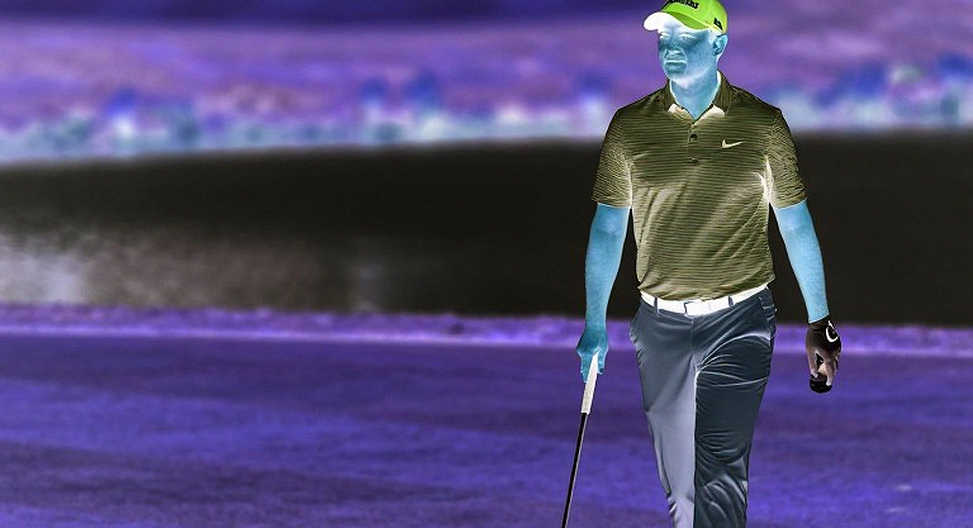
When bunkers get longer, the bunker escape most golfers know — the 10 to 15-yard greenside shot — stops being enough. At that range, the open-face technique still works perfectly: high flight, soft landing, quick stop. Past 20 yards, the same technique turns against its owner. The ball climbs too high, travels too short, and the player watches it roll back toward them.
That is exactly the gap a widely circulated instruction piece targeted this week. It builds a tidy hypothesis: Medinah rebuilt its bunkers, the Presidents Cup will generate more long bunker recoveries than usual, and viewers should learn the shot before they sit down to watch. The hypothesis sounds reasonable. It has also not been verified by a single concrete datum — no yardage, no bunker count, no depth, no sand type, no source beyond the author. But the technique standing behind it merits discussion, even when the news peg standing in front of it does not hold.

The real mechanism is the entry point, not the club
The prescribed method has four parts, and the part that gets the most attention is not the part that matters most.
The club ladder is the visible layer. Sand wedge is the default starting point. Need more carry and you step up to a gap wedge, then a pitching wedge. Less loft, lower flight, more roll.
The motion changes too: instead of the soft, high, open-faced bunker swing, the player uses a pitch-style motion — the same shape as a short approach from the fairway.
The backswing is taken wider and slightly slower. It is a rhythm cue aimed at reducing steepness and instability.

The most important part sits at the entry point. The club is delivered into the sand closer to the ball than in a standard bunker shot. Closer to the ball means more ball and less sand. Less sand means a lower flight and more run. That is the mechanism that converts a bunker flop into a low, running pitch.
The key point: swapping clubs is the visible variable, while managing the entry point is the actual technical lever. A pitching wedge still produces a high, short shot if it buries itself five centimetres behind the ball. A player who only buys another club without fixing the contact point has bought new equipment to preserve the same problem.
On the practice pathway, the instruction does one thing I rate highly: it asks the player to rehearse the motion on grass first, then transfer it into the sand. That sequence exploits an existing motor pattern — the pitch — and varies only one condition, the contact surface. For lower-handicap and mid-handicap players, that is a far better learning route than cramming four new skills into the sand at once. The article also correctly warns that a ball from sand will not travel as far as from grass, and that time is needed to recalibrate distance.
From a failed start line to the commentary box: every scar becomes a map. Mine here was that 28-yard shot at Do Son. It taught me that most bunker errors are not errors of the hands. They are errors of picking the wrong tool for the right distance.
The hidden price: bounce, sand, and balls sitting down
Here I have to be blunt: this instruction piece ignores almost every variable that kills a bunker shot in the real world.
It never mentions wedge bounce or grind. In soft, wet, or thin sand, a low-bounce wedge delivered close to the ball digs rather than glides — and the shot dies on the spot. It never mentions a plugged ball, a buried ball, an uphill or downhill lie. It does not distinguish dry, fluffy sand from damp, packed sand. Every one of those situations makes the more-ball, less-sand solution the riskiest option in the bag.
And it offers no numbers at all. No launch monitor, no ball speed, no spin rate, no rollout data. The claim of a lower flight and more run rests entirely on the author's authority. Every data point is capable of lying; my job is to catch it in the act — but here there is no data to catch. That absence is itself information.
The advice to watch the pros hit this shot this week belongs to the same family of problems. It implies observation is sufficient to learn. Observation is necessary, but what a long bunker shot demands is a feel calibrated by hundreds of repetitions — something a screen cannot transmit. Empty stadiums in the summer of 2026 taught me to hear a match with my heartbeat, not with sound; a long bunker shot is the same, heard through the feet, not the eyes.
There is a subtler price as well. Choosing to de-loft in exchange for roll means trading away exactly what the high, soft bunker shot provides: stopping power. More run means more green reading, a more precise landing spot, and an allowance for slope and green speed. For an amateur, that is a sound trade. For a tour professional, it is a strategic downgrade — that cohort typically uses trajectory and spin as its two primary control levers, and rarely swaps them for rollout.
The absurdity sits here: the piece teaches a shot it says the elite are about to face, yet names no player, cites no shot, and quotes no coach. The entire evidentiary basis for the claim that tour players hit it this way is one unverifiable generalisation. The truth sits elsewhere: this shot is not the signature of any particular star, so there is no name to call.
So when should you use it
My conclusion stays the same. Learn the shot. Do not make it the default.
Treat it as an option for a good lie, even sand, and a pin where the running path is not blocked. Keep the high, soft bunker shot for short-sided pins — the ones where the ball must stop on landing. Check the bounce on your gap wedge and pitching wedge before taking them into sand. And practise on grass first, exactly as the article's progression suggests, because that is the most defensible part of the whole package.
If the 2026 Presidents Cup at Medinah really does produce more long bunker recoveries, we will have data to test it: both teams' bunker save percentages against seasonal baselines. That is when the article's hypothesis gets its answer. Until then, the only certainties are a lower-lofted club, an entry point closer to the ball, and a great many repetitions before trust shows up. The 2026 fall did not stop me — it redirected the whole lane. The long bunker shot works the same way: it does not ask you to hit harder, it asks you to pick a different landing spot.