
USD 305,000, 5% Interest and 45 Days: FIFA Opens Thanh Hoa's Debt Book
Câu hỏi: FIFA đã ra phán quyết gì giữa CLB Thanh Hóa và Rimario Gordon? Trả lời cốt lõi: FIFA buộc CLB Thanh Hóa trả 305.000 USD tiền lương còn nợ cho Rimario Gordon, cộng lãi suất 5% tính từ ngày 18-6. Đội bóng có 45 ngày để thanh toán, nếu không sẽ bị cấm đăng ký cầu thủ mới tối đa ba kỳ chuyển nhượng. Dữ kiện chính: - Phán quyết công bố ngày 10 tháng 9 năm 2026, số tiền 305.000 USD, tương đương gần 8 tỉ đồng. - Lãi suất 5% áp dụng tính từ ngày 18-6. - Hạn thanh toán 45 ngày; hình phạt là cấm đăng ký cầu thủ tối đa ba kỳ chuyển nhượng. - Rimario Gordon sinh năm 1994, gắn với Thanh Hóa giai đoạn 2019 và 2023-2026. - Hiện Rimario khoác áo Thể Công - Viettel mùa giải 2026-2027. Nguồn: FIFA, công bố ngày 10 tháng 9 năm 2026 | Cross-checked: VuaBong.vn Hỏi đáp liên quan: Q: CLB Thanh Hóa sẽ bị phạt gì nếu không thanh toán khoản nợ? A: Bị cấm đăng ký cầu thủ mới trong nước và quốc tế tối đa ba kỳ chuyển nhượng, mức kỷ luật tiếp tục tăng nếu nợ kéo dài. Q: Rimario Gordon hiện đang thi đấu cho câu lạc bộ nào? A: Thể Công - Viettel ở mùa giải 2026-2027. Q: CLB Thanh Hóa đã vượt qua khủng hoảng tài chính chưa? A: Đội bóng có nhà tài trợ mới từ mùa giải 2026-2027, tạm thời vượt qua khó khăn để tiếp tục thi đấu.
On September 10, FIFA issued a notice resolving the dispute between Thanh Hoa FC and striker Rimario Gordon. The ruling orders the club from Thanh Hoa province to pay USD 305,000, roughly 8 billion Vietnamese dong, in unpaid wages, plus 5% interest calculated from June 18. Three pages of document, without a single emotional sentence. Yet it is enough to lock the club's transfer window for up to three consecutive periods if the money is not transferred within 45 days.
Under FIFA regulations, the 45-day mark is a hard deadline. Beyond it, Thanh Hoa is banned from registering new players both domestically and internationally, for up to three transfer windows, until the financial obligation is settled. If the debt remains beyond those three windows, FIFA will raise the level of sanctions further. This mechanism has been applied to plenty of clubs worldwide, but in the V-League it remains unfamiliar territory for most fans.
I have followed figures like these for many years. Cash flows silently beneath every match, and I have waded down to count every single coin. And Thanh Hoa's story does not begin in September. It begins in a season when the club leadership knew it could not pay wages, yet still signed contracts, still registered players, still made verbal promises.
Rimario Gordon was born in 2026 and is one of the best-known foreign strikers in the V-League. He has played in Vietnam for nearly five years, worn the shirts of several big clubs and collected many honours. He first joined Thanh Hoa in 2026. His second spell ran from 2026 to 2026. Two spells. The same club. That says a great deal about the relationship between player and club, and a great deal about why the second spell ended with an application to FIFA.
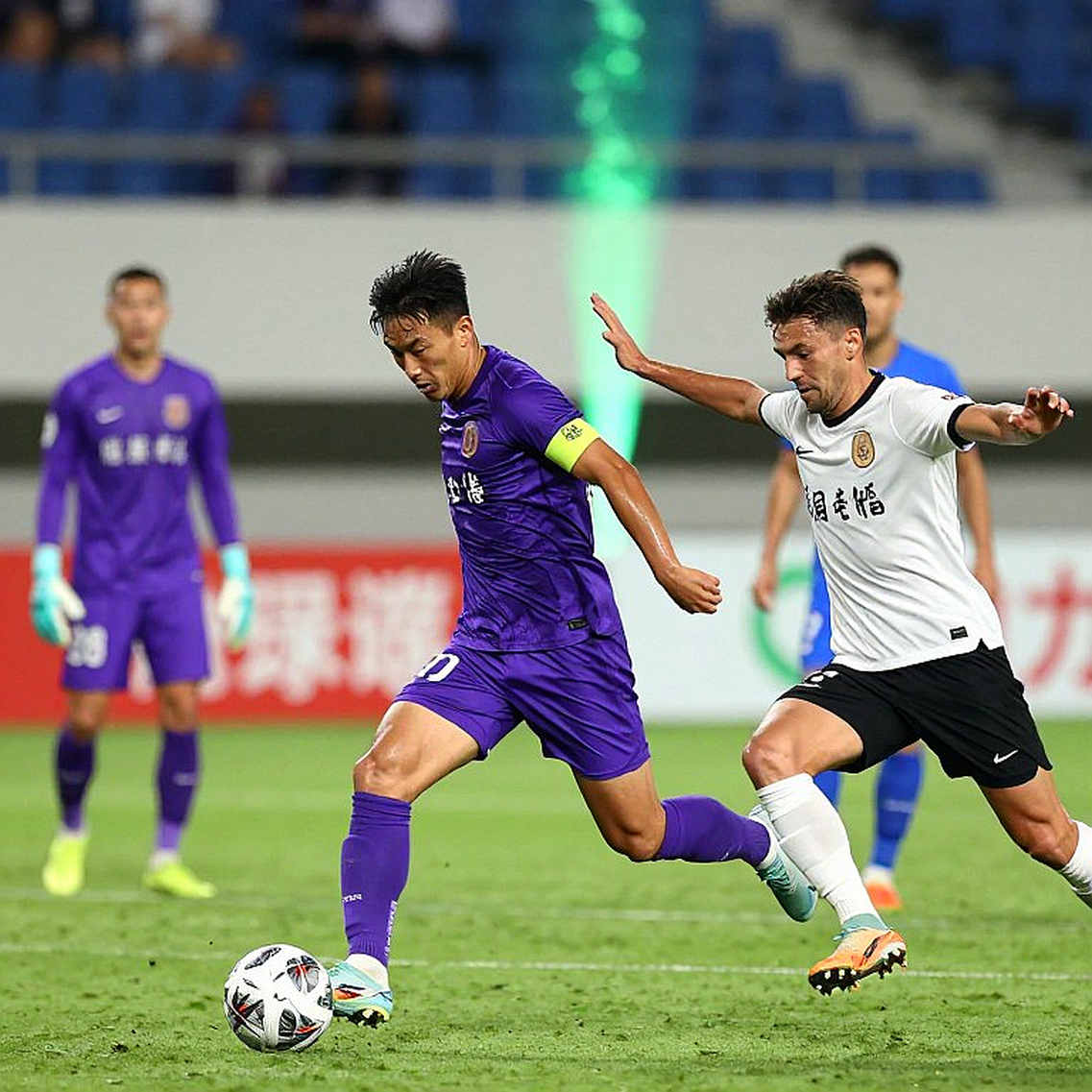
At the end of the 2026-2026 season, Thanh Hoa fell into a financial crisis. The club could no longer afford to pay its players, including Rimario. The striker left the club at the end of April. He is now playing for The Cong - Viettel in the 2026-2027 season. As for Thanh Hoa, they have secured a new sponsor this season, temporarily overcoming financial difficulties to continue competing in the national professional leagues.
There is one detail few notice. The new sponsor arrived, the club survived the crisis, but the old debt still sits on the table. That is the nature of the Vietnamese transfer market: new money pays for the future, while old debts are buried beneath the pitch, waiting for a document from Zurich to knock on the door. Every transfer contract buries a piece of the truth.
I want to pause on the figure of USD 305,000, because this is the point parties usually avoid. This is not a signing bonus, not a title bonus, not an agent fee. This is wages, the labour compensation of a player who stepped onto the pitch, scored goals and served the club for months. In other words, this is a sum any business must pay its workers, unless it chooses not to.
Under the ruling, 5% interest is calculated from June 18. This is a key date. It shows the parties had a clear agreement or reference point, and that payment was delayed past it. On USD 305,000, 5% annual interest equals about USD 15,250, nearly 400 million dong, in interest alone. The longer payment drags on, the larger the number grows. That is why some clubs choose to wait: they believe time will smooth everything over.
But FIFA does not operate on that logic. The 45-day mechanism is designed to create immediate pressure, not to negotiate. After 45 days, the first sanction is a ban on registering new players. This strikes at the most sensitive spot of a football club. You can be fined, you can be warned, but when you cannot register new players, you lose the ability to rebuild your squad. No signings, no replacements, no upgrades. The club is frozen in its current state.
This sanction lasts up to three transfer windows. Three windows. In the V-League, each season typically has two main transfer windows. Three windows equals nearly eighteen months without registering new players. For a club fighting relegation or chasing a continental spot, that is an almost fatal sentence. And if after three windows the debt remains unpaid, FIFA will raise the sanctions further. This escalation mechanism has no natural stopping point.
Based on my experience watching matches, I have noticed that V-League clubs share a common reflex when facing financial sanctions: waiting. Waiting for a new sponsor, for a player sale, for renegotiation. With empty stands, the sound of money clashing is heard most clearly. But when the opponent is FIFA, waiting is no longer a strategy. It only makes the clock run and the interest number climb.
Notably, this case is not isolated. In recent years, Vietnamese clubs have repeatedly been reported to FIFA by foreign players over unpaid wages, signing fees and transfer fees. Most cases end with the same script: the club delays, the player files, FIFA rules, and the club either pays at the last minute or suffers sanctions. But those cases are rarely fully public. They surface only when a player is famous enough, patient enough and knowledgeable enough to pursue it to the end.
Rimario is one of them. He has spent nearly five years in Vietnam, understands the rules of the game and how clubs operate. He did not file out of momentary anger. He filed because he knew that once the document left Vietnam for Zurich, the story would no longer be in the club's hands.
Now let us consider the other side. Thanh Hoa genuinely endured a difficult season. At the end of 2026-2026, the club had no money for wages, and the leadership scrambled to keep the team competing. This is a reality anyone following the V-League can see. Not every club has the resources to guarantee stable cash flow. And when cash flow breaks, the first to suffer are usually not the leaders, but the players and staff.
In Russia, I saw people buy a player's age, but they could not buy his future. Now, in Vietnam, I see people buy titles for clubs, but they cannot buy transparency for the books. Thanh Hoa's problem is not merely a lack of money. The problem is a governance structure that allows a club to sign contracts knowing it cannot pay, and allows a debt to exist for months without anyone bearing personal responsibility.
This is the point I want to stress: a club lacking money is normal. A club lacking money that still signs new contracts, still raises its wage bill, still promises what it knows it cannot deliver, is not a financial matter. It is a governance matter.
The crisis at Thanh Hoa unfolded quietly for months before it erupted. The players still trained, still took the field, still competed. On television, no sign suggested the club was slowly dying from lack of money. The scoreboard still lit up. The passes were still made. But behind it, the cash flow had stopped. That is the nature of financial crises in football: they do not appear on the pitch. They appear on the payroll.
The USD 305,000 FIFA orders Thanh Hoa to pay is not the only sum. It is merely the one brought into the light. In the club's debt book, how many other sums remain unnamed? How many players left without receiving their full pay? How many staff worked without wages? How many contracts were signed in ink but amended in cash, never appearing on the books?
These are questions no ruling can answer. And that is why financial crises in football tend to recur under a new name, at a new club, with new players.
Let us look at the opposite side of the story, because there is a reasonable part here I do not want to ignore. In Vietnamese football, clubs facing financial trouble is routine. Revenue from broadcasting, sponsorship and ticket sales is not enough to cover operating costs. Many clubs live on benefactors, and when the benefactor withdraws, the club collapses. This is a structural reality, not the fault of any single person or group.
In that context, a club choosing to delay payment to keep the team alive might be seen as a survival decision. If Thanh Hoa paid the entire debt at once, it might not have enough money to operate for the rest of the season. In other words, holding that money back might be the way to survive the hardest period.
But this is precisely the crux I want to put on the table: if you choose to withhold workers' money to save the club, you are choosing to sacrifice a specific group of people to protect a legal entity. And in this case, the sacrificed group includes a striker who served the club across two spells. He is not the cause of the crisis. He is merely the one bearing its consequences.
There is another view, possibly controversial. Some will say USD 305,000 is a large sum for a V-League club, and that Rimario pursuing it to the end is too harsh. But this argument puts the emphasis in the wrong place. The question is not whether the sum is large or small. The question is whether a labour contract is respected. If a player signs a contract and takes the field, he has completed his part. The rest belongs to the club.
As for FIFA, this decision also reveals a notable trend: financial sanctions are being enforced ever more seriously, including in small Southeast Asian leagues. The 45-day mechanism, the three-window transfer ban, the escalation if the debt persists, all aim to create a common standard. There is no exception for developing leagues. No exception for clubs in difficulty.
This places Vietnamese clubs before a clear choice: build a financial structure sound enough to honour contracts, or prepare to face ever-harsher sanctions. The middle ground cannot last forever. The transfer market runs on relationships, not on law, but once a document arrives from Zurich, relationships are worth nothing.
As for Rimario, he left Thanh Hoa at the end of April. He now plays for The Cong - Viettel in the 2026-2027 season. His new club can rest assured of one thing: if a dispute arises, the law will side with a player who knows how to defend his rights. Even so, I want to repeat something I learned after years in this profession: a foreign player in Vietnam, however talented, is only protected if he understands the law and is patient enough to pursue it to the end. Not everyone can do that.
For Thanh Hoa, they have a new sponsor this season, temporarily overcoming financial difficulties to continue in the national professional leagues. But a new sponsor cannot erase an old debt. And that is the problem the league table cannot reflect.
I look at the figure of USD 305,000 and see more than an unpaid wage. I see a model of operation that has repeated too many times. A club expands its wage bill beyond its means. A hard season arrives. Cash flow breaks. The foreign player becomes the first and last to fend for himself. An application to FIFA. A ruling. A sanction. And then, when a new sponsor appears, the cycle begins again.
In the end, I think the question worth asking is not whether Thanh Hoa can pay this sum. The question is how many other players, how many other staff, have been placed in the same situation without the ability to appeal to an international forum. And if the system only protects those famous enough to file, then that system operates in a way no ledger fully records. Over the next 45 days, the clock is running. But for most of those involved, it has been running for a long time already.

Cầu thủ liên quan
Bài đề xuất
Thanh Hoa's Rebirth: The Survival Equation Goes Beyond the Pitch2026-09-04
Seventeen Names and Twelve Billion Dong: Vietnamese Football's Books Are Written in the Boardroom2026-09-15
Doan Ngoc Tan out for 4 weeks after foul by Doan Van Hau2026-09-12
A 600 Million VND Car, 5 Goals and a Sleepless Night: The Nguyen Xuan Son Story2026-09-08
Vietnamese Youth Football and the Silent Season: When Rough Gems Sleep Beneath the Mud2026-09-15
Thanh Hoa's New Beginning: From 18 Players to Top-Half Dreams - A Symphony of Calculated Risk2026-09-04
Sports analysis cannot be performed due to missing data2026-09-08
Philippines U23 and the Overage Challenge: When Asiad Is No Longer a Youth Playground2026-09-07
Bài đề xuất
HAGL suffers 0-4 defeat to Nam Định in round 1 of V-League 2026/2027, young team lacks depth and preparation2026-09-07
Thanh Hoa's Rebirth: The Survival Equation Goes Beyond the Pitch2026-09-04
V-League 2026-2027 Opening Round: Pressure Mounts on Hanoi FC and Cong An TP.HCM2026-09-04
Ninh Binh Keeps Nguyen Hoang Duc Until 20302026-09-04
A 600 Million VND Car, 5 Goals and a Sleepless Night: The Nguyen Xuan Son Story2026-09-08
Minute 60 and the Blank Spreadsheet: How V.League Reads Silence as Safety2026-09-14
Hoang Duc and the 2030 Contract: Ninh Binh Rewriting the Poetry of Promotion2026-09-04
V.League 2026-2027: Pressure and Opportunity in a New Era2026-09-04